

R&D LAB Computational Design Study A model, not a chronicle
Prereq
A dependency atlas of technology
130 capabilities, 348 reasoned edges, and thirteen invariants that stop the run on a violation.
- 130capabilities
- 348reasoned edges
- 13invariants that abort
- 44violations caught by machine
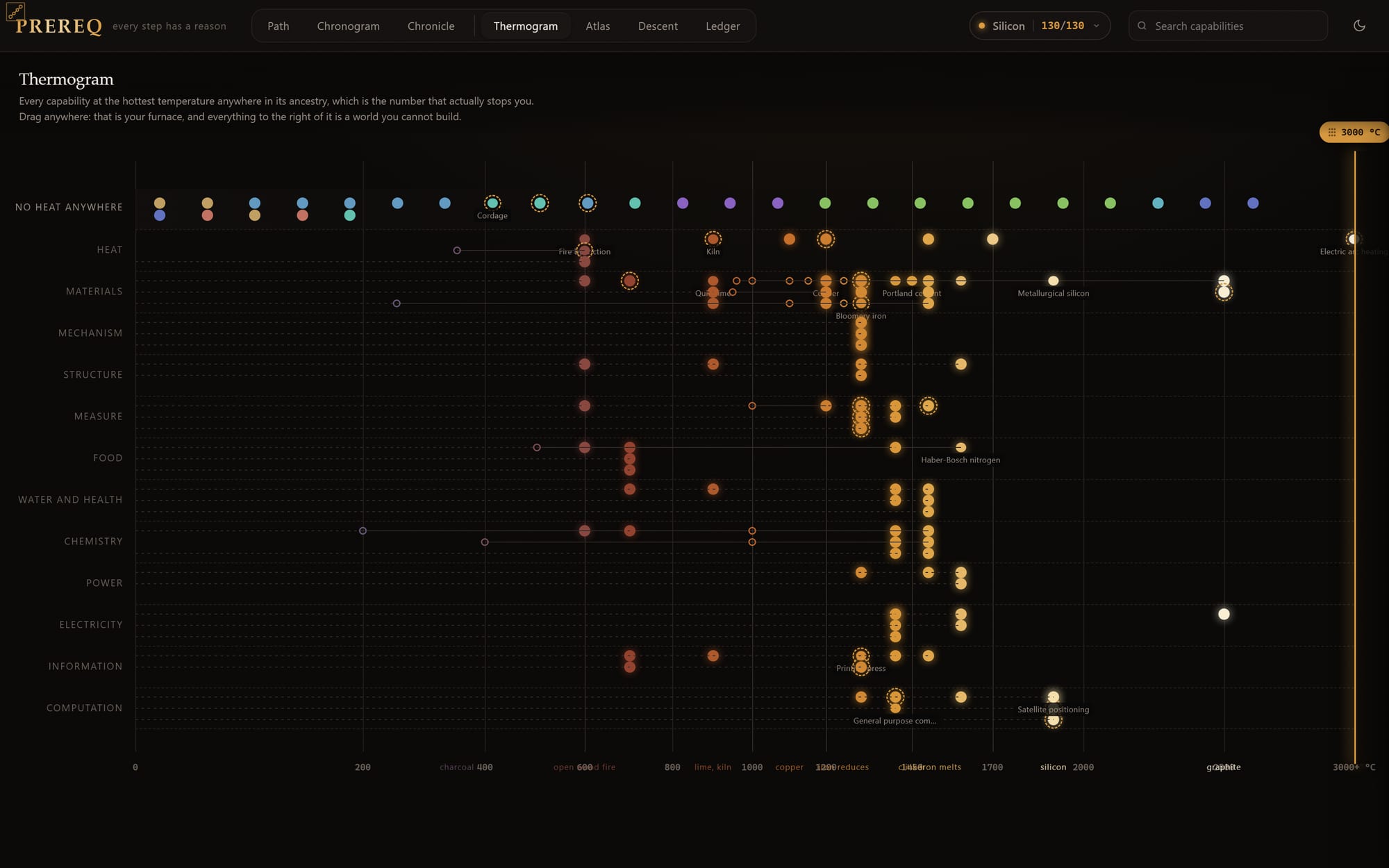
Colour here is temperature, never category. Draw a line at what your own furnace manages and everything to the right of it is a world you cannot build.
Why this is published
Many of the systems we build make more statements than anyone can read through by hand. Prereq shows how we handle that: the rule is written as an executable test, and the run stops the moment it is broken. The sharpest rule in the atlas compares two independently entered fields, so it needs no judgement and keeps working at exactly the point where reading stops being enough. A bill of materials, a tariff model and a manufacturing rule ask for the same discipline.
A dependency graph of technology is easy to assert and hard to evidence: every edge is a claim, and a graph that sounds plausible is indistinguishable from the outside from one that is right. Prereq attacks that with constraints that live in the code rather than in a document. Every edge is either hard, meaning the capability does not exist without it, or a question of scale, meaning it does exist, just not at a useful rate, quality or price. That one distinction is what separates this atlas from a plausible-sounding one.
The idea
A dependency graph is cheap to assert
Draw arrows between capabilities and it looks like knowledge straight away. That is exactly the problem. A graph that sounds plausible is indistinguishable from the outside from one that is right, because every edge is an assertion, and nobody reads 348 assertions by hand.
Prereq attacks that with a single distinction that lives in the code rather than in a document. An edge is either hard, meaning the capability does not exist without it, or it is a question of scale, meaning the capability does exist, just not at a useful rate, quality or price. Bronze without tin is not bronze. Bronze without mining is bronze in small quantity.
The distinction works because it can be checked. Reachability, layering and the knot taxonomy run on the hard graph alone; at-scale edges are surfaced and never gate possibility. So calling an edge hard means writing down a physical reason that manages without words like „reliably“, „at volume“ or „cheaply“.
Before that rule the atlas found seven cycles and took them for a discovery. They were not. Every one of them was built out of a rate claim doing possibility work. After the rule, zero true cycles remain: civilisation has no real chicken-and-egg problems, only expensive ones. That is the first result that was not asserted but left over.
The atlas is a model, not a history. The years are inputs the checks bite on, not the outcome of source work. What this page evidences is that the data does not contradict itself, not that it is true, and the application says both.
A graph that sounds like knowledge differs from one that is knowledge only by a check that aborts.
The rule
What an edge has to pass before it stays in the graph
- 01 Write a reason Each of the 348 edges carries its own written physical reason. An edge without one fails the run. This is not a comment, it is a condition.
- 02 Decide hard or at scale Hard means the capability does not exist without it. At scale means it does exist, only slower, worse or dearer. 269 edges are hard, 79 are at scale.
- 03 Check against the wordlist If the reason on a hard edge contains phrasing like „reliably“, „at volume“ or „cheaply“, it is a rate claim in disguise and the run aborts. The reverse holds too: an at-scale reason asserting impossibility also fails, because it has to name the worse version that works without the prerequisite.
- 04 Check against the year No hard prerequisite may be dated later than the thing it enables. The rule needs no judgement, because two independently written fields have to agree. Laid over the data it picked up 44 violations.
- 05 Check against the record substrate A capability that needs a level of record keeping may not predate the substrate that record can live on. That too is a comparison of fields, not a judgement.
- 06 Only then layer Reachability, longest-path layering and the ancestor and descendant cones run on the hard edges alone. Thirteen invariants check the finished state and end the run with an error code on any violation.
A list in historical order and a graph of reasoned edges
The timeline
- Says when something was done.
- Implies that the order was necessary.
- Cannot say what had to exist first.
- Knows no difference between „impossible“ and „not fast enough“.
- Gives no reason per entry, only a date.
- Has nothing it could fail.
The atlas
- Says when something became possible, and computes the gap to the date it was actually taken.
- The order to discover things in diverges sharply from history: food preservation is step 29 in the graph and number 92 in history, the pulley 14 against 50, the spring 54 against 15.
- The descent walks any capability layer by layer back down to six primitives.
- Hard and at scale are two kinds of edge with two different consequences.
- Every edge carries a written reason rather than an opinion.
- Thirteen invariants abort the run the moment the data contradicts itself.
What the distinction does to the graph
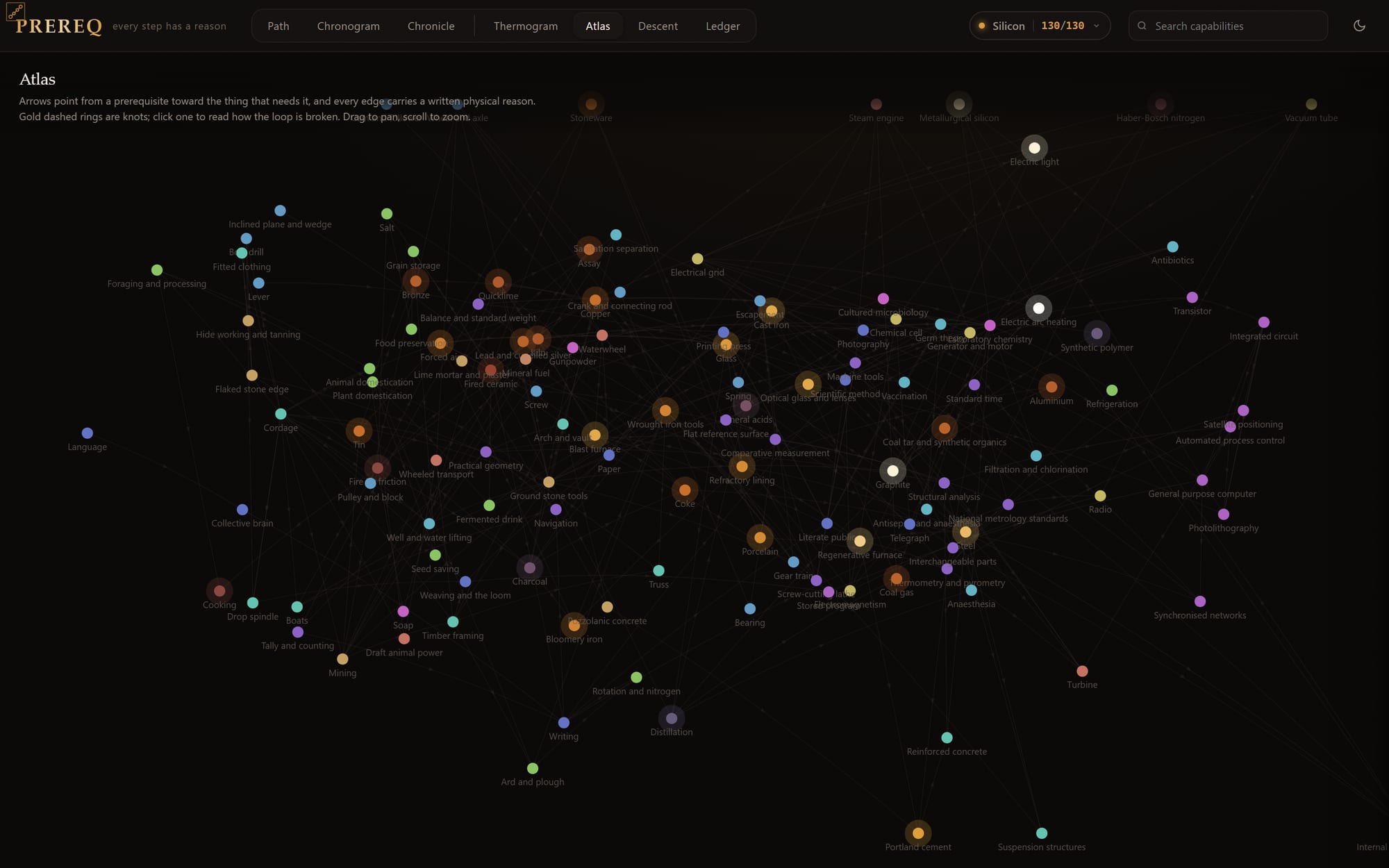
The atlas shows 130 capabilities and 348 edges, every arrow pointing from the prerequisite toward the thing that needs it. The dashed rings are knots, and one click says how the loop is broken. Seven of them are knots at scale, three capabilities bootstrap themselves, and there is not a single true mutual knot.
That is not tidying of the drawing, it is the output of the rule. Every apparent circularity dissolves the moment one of the two sides is allowed a worse version. You do not need a precision lathe to build a precision lathe; you need a worse one, and the edge is a question of scale.
The last two candidates, cordage and precision, fell on the second honesty pass. Both were built out of phrasing that had slipped past the project's own wordlist.
The check that needs no judgement
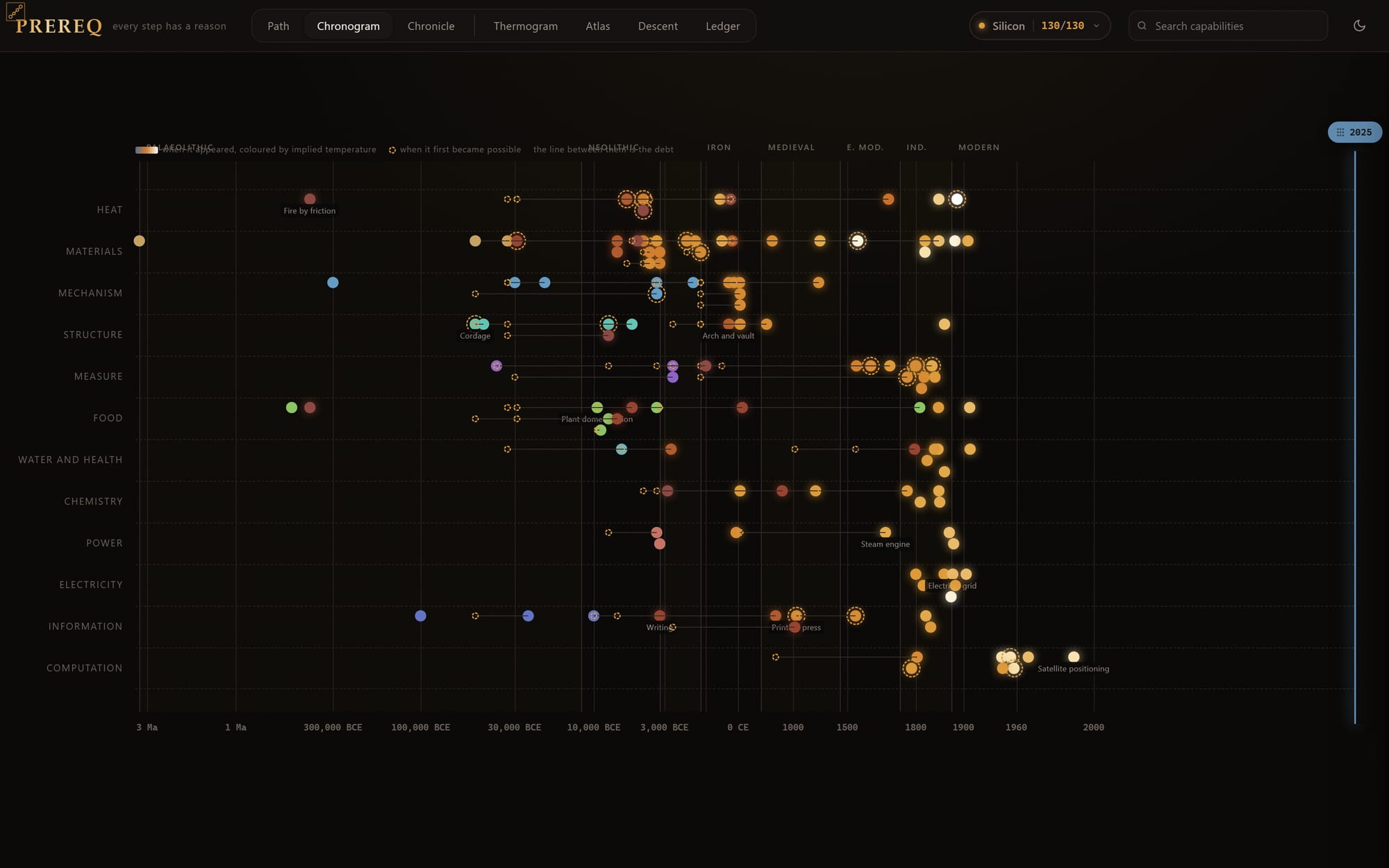
The sharpest invariant is the simplest: no hard prerequisite may be dated later than the thing it enables. It needs no judgement, because two independently written fields have to agree. Laid over the data it picked up 44 violations, every one of them either a wrong date or a rate claim that had escaped the wordlist.
That is the whole point of machine checking. A person reading 348 edges does not see the two that do not fit. A comparison of two fields sees them immediately and never misses one.
The same arithmetic produces a second quantity nobody entered. If a capability is possible from the year its last hard prerequisite is attested, then the gap to the date it was actually taken is computed technological debt. The bow drill heads that list at roughly 46,500 years. Where the substructure reaches into deep prehistory the number measures the distance between two datings rather than an invention left lying around, and those nodes are marked and kept out of the rankings.
One capability in full
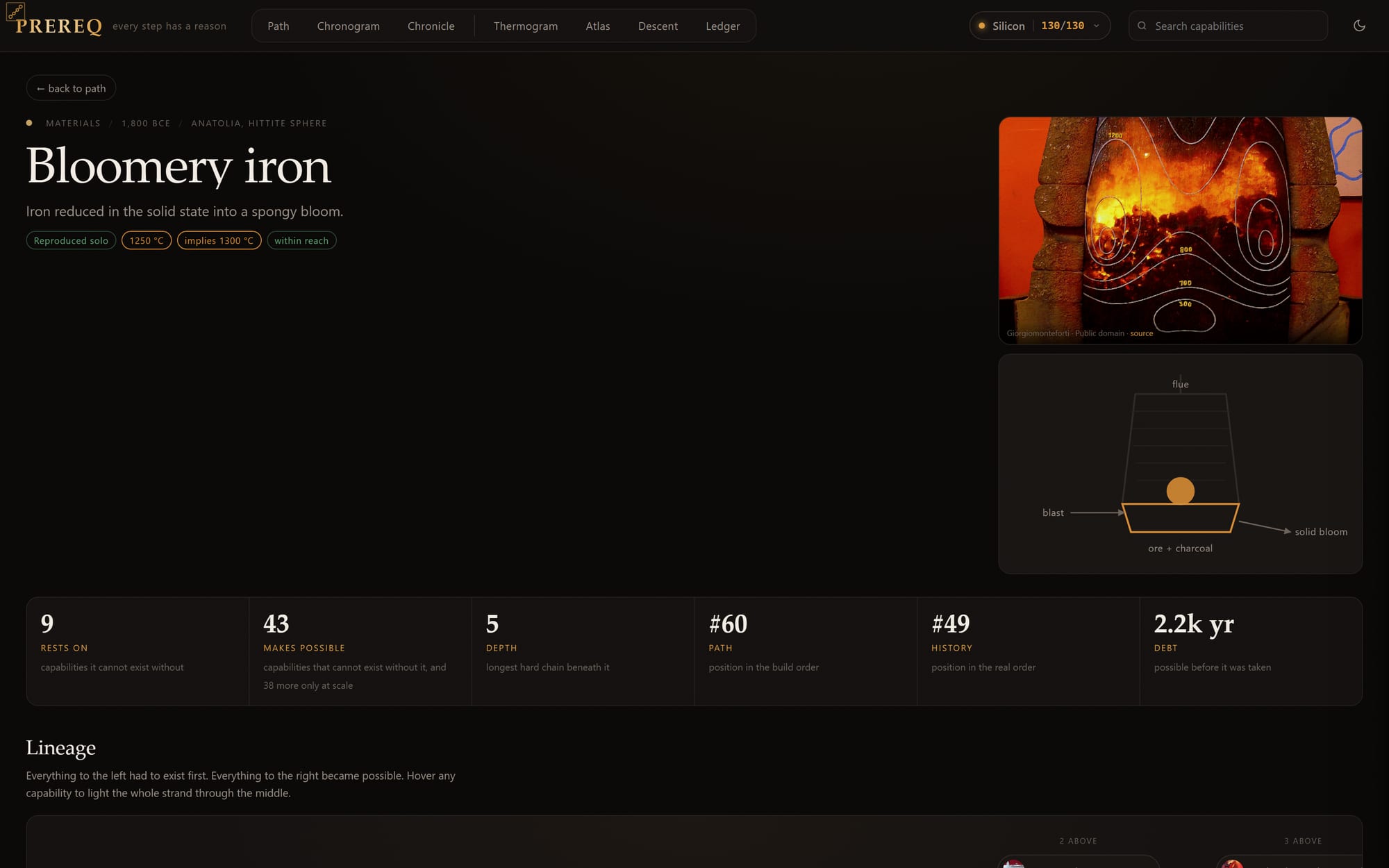
Six key figures, and not one of them was entered by hand. Nine capabilities sit in the hard ancestor cone, 43 in the descendant cone, the longest hard chain beneath it is five layers deep, position 60 in the order to discover things in stands against position 49 in the historical one, and the debt is 2,200 years. All six fall out of the graph; recomputing on 2026-09-05 confirmed the 43 and both positions.
Below that the lineage runs in both directions: on the left what had to exist first, on the right what became possible because of it. The photograph comes from Wikimedia Commons and carries its author and licence visibly in the frame; the mechanism drawing beside it is our own SVG, one of 23 parametric archetypes, traced from no book.
The same graph, four questions
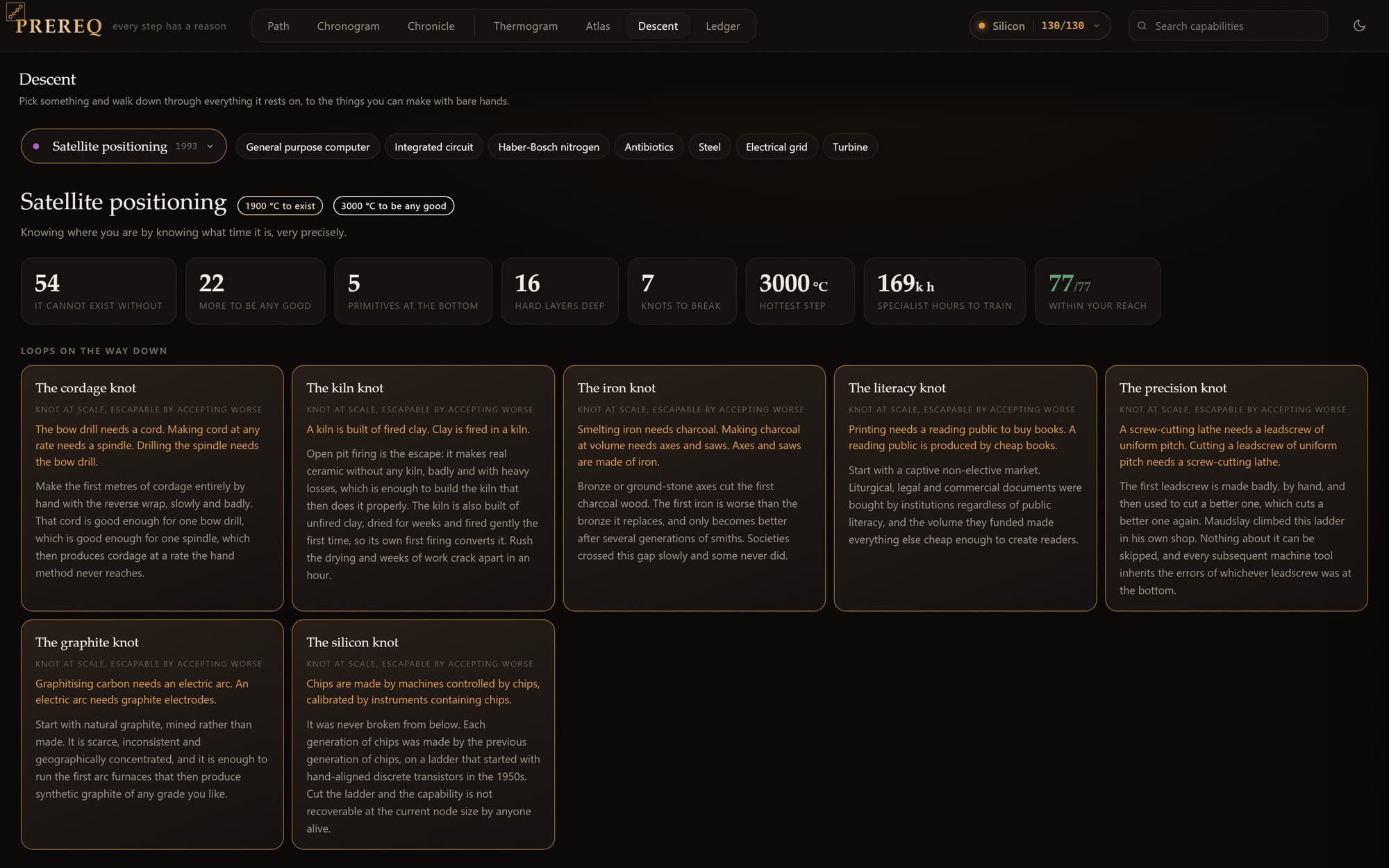


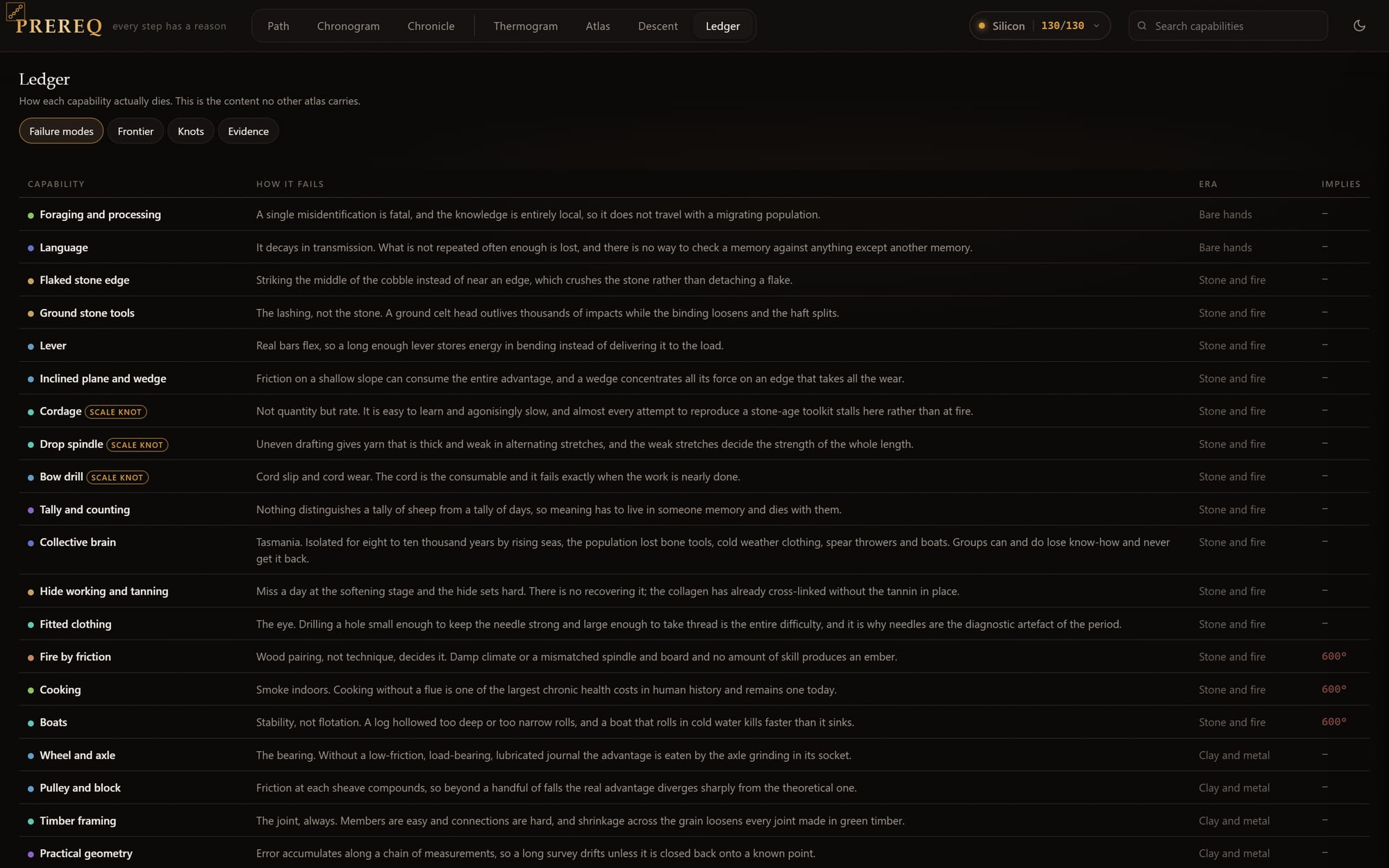
What lies underneath
Where the same method applies to you
- Bills of materials and production sequences where „impossible“ and „not fast enough“ are two different statements with two different costs.
- Rule sets and tariff models carrying more clauses than a person can still read for contradiction.
- Supply chain and dependency maps whose value depends on every edge carrying a reason rather than an opinion.
- Any body of data large enough that checking by hand has become checking a sample.
Image credits: every frame on this page is a screenshot of our own application. The photographs shown inside it are from Wikimedia Commons, free-licensed or public domain only, and each is displayed in the application with its author, licence and source page.
Why this is published
What this means for your project
More from the lab
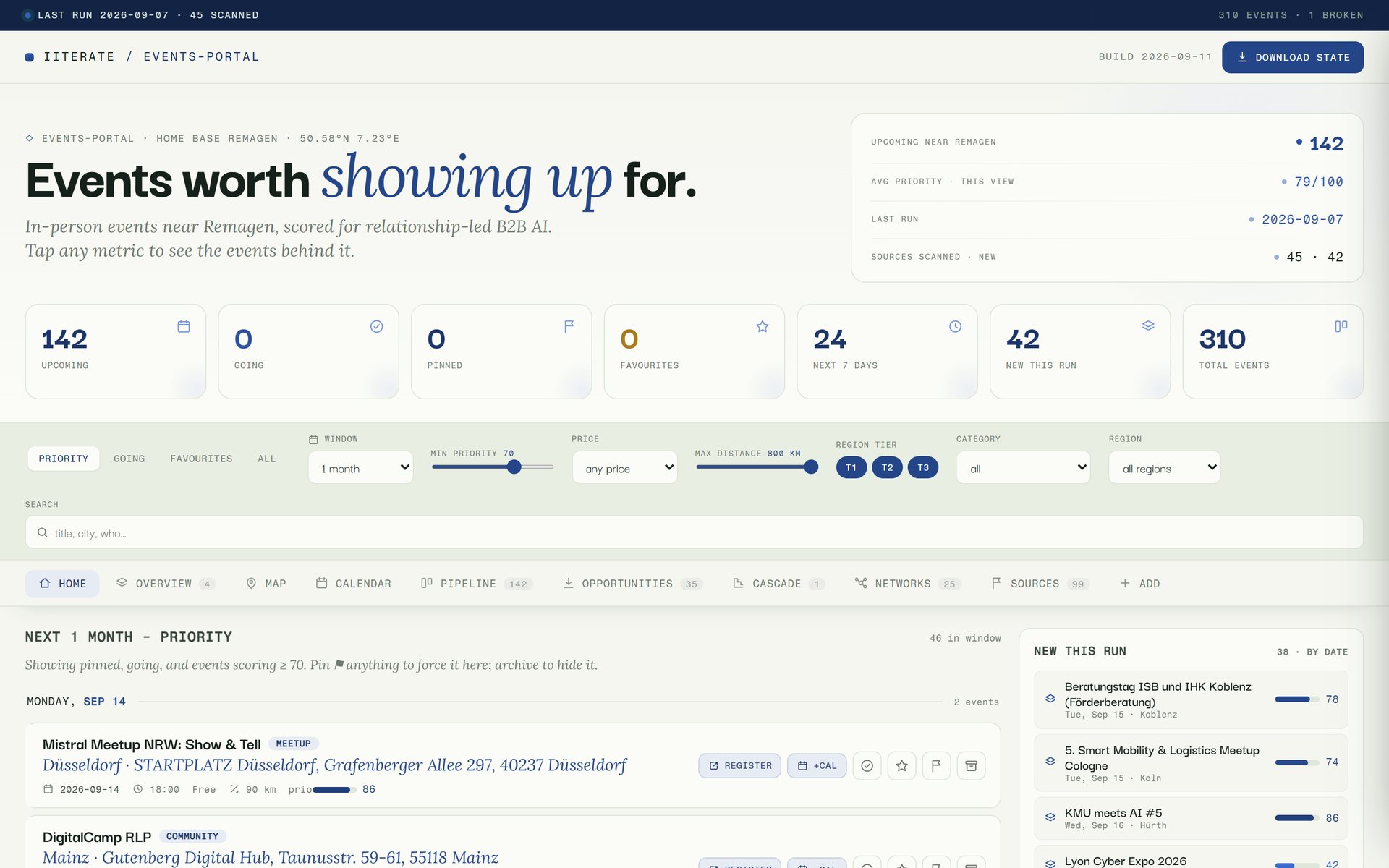 Method Event Scout A language model reads the event pages; everything else is fixed code. What remains is a short list of where a day in person is worth it.
 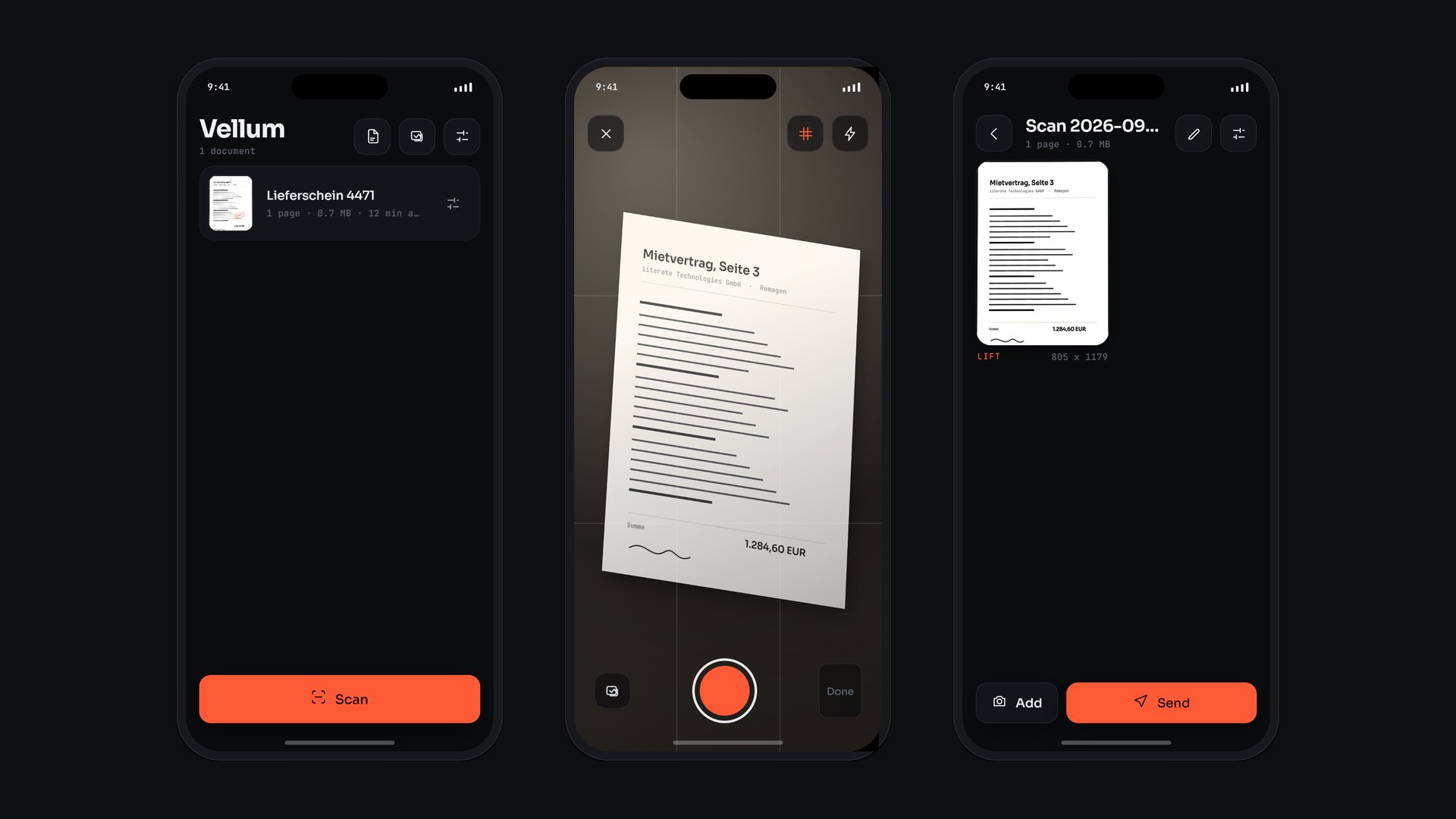 Applied Research Vellum Edges, perspective, light and text are all worked out on the phone. A document leaves the device only when someone sends it.
  Computational Design Atlas EV1 Twelve chapters take an electric car apart, down to a single cell. No model files, no textures: 327 parts generated from one dimension table.
 Put the same verification discipline on your data
Get in touch