

PROJECTSoftware & Automation
Forty-Five Years of Building, Put Online
A marketing site for a Delhi NCR construction firm, with a content system that the family can run themselves. Projects, photographs, enquiries, and even the logo are all editable in the browser. When the site was handed over, it came with documentation, not a standing dependency on us.
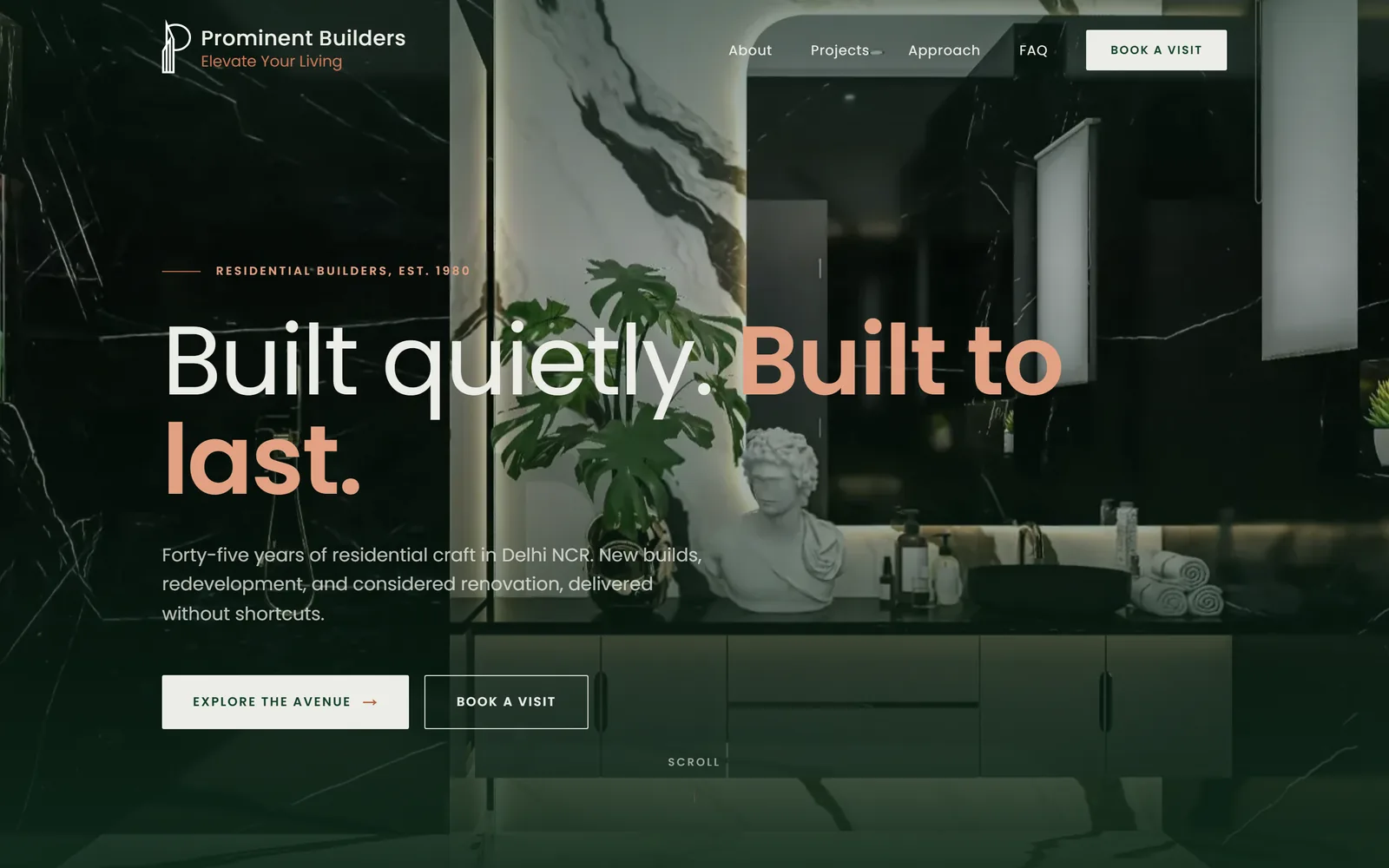
A site for real enquiries, not just presentation
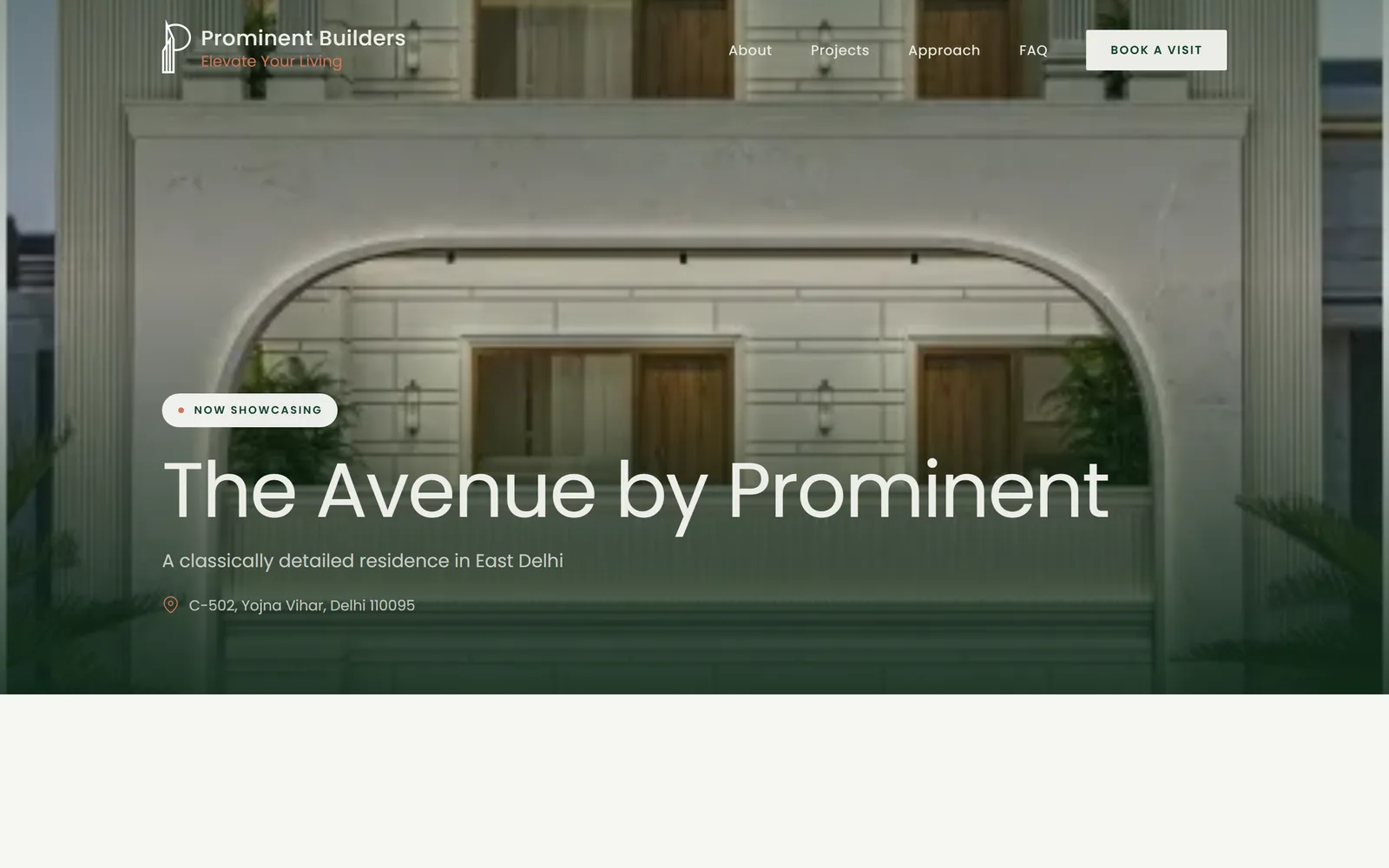
Prominent Builders has been working in Delhi NCR since 1980. Over four decades later, the brief was not to reinvent the business online, but to give it a website that reflects the way the company already works: practical, reliable, and built to last.
The company wanted more than an online brochure. They needed a site that showed the work properly and helped turn visitors into enquiries.
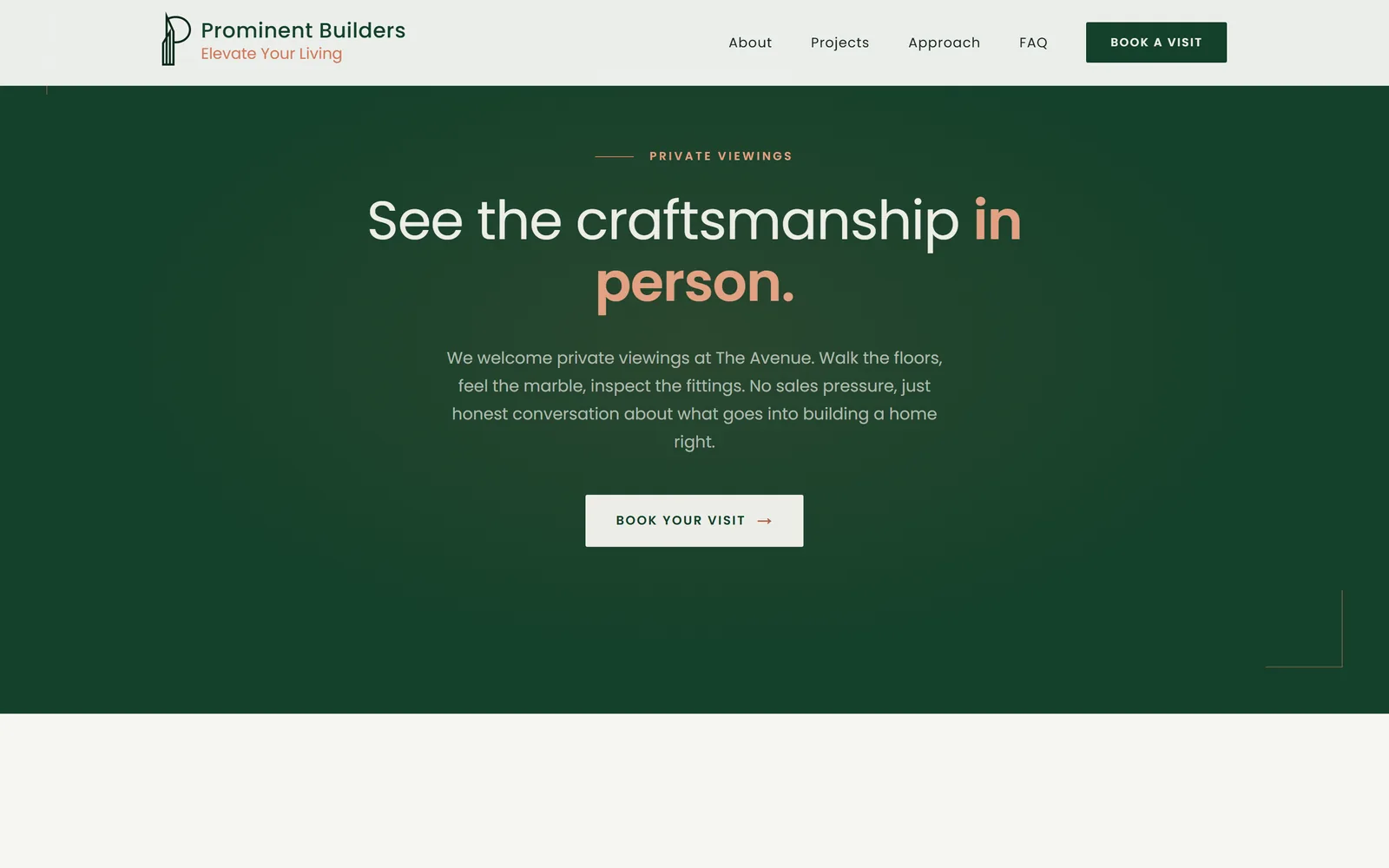
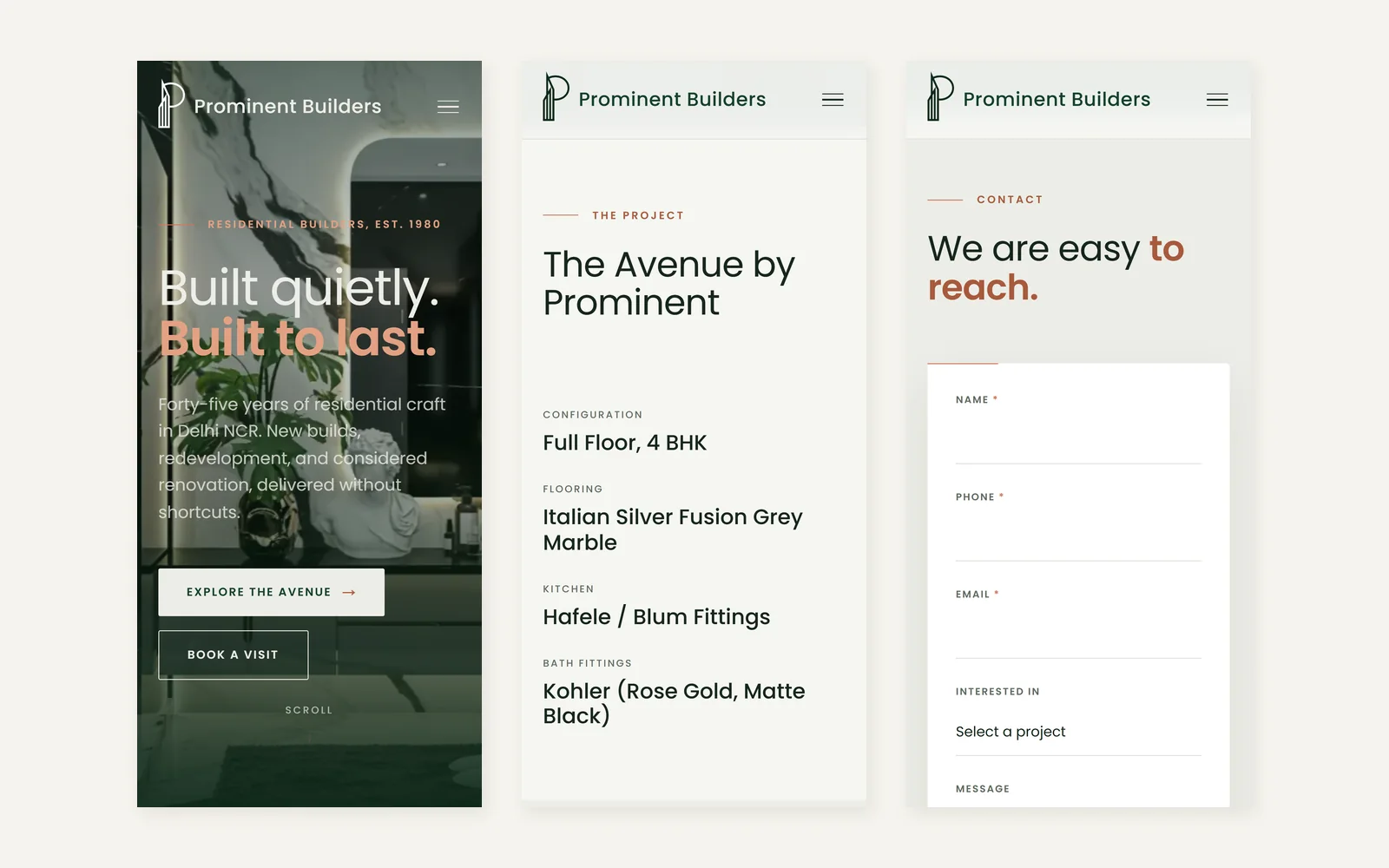
The structure is straightforward: a homepage, a projects list, a page for each project, an about page, and a contact form. That sounds simple, and it should. For a construction business, clarity matters more than novelty. People visiting the site are usually looking for evidence, what has been built, where it was built, what kind of project it was, and whether the company can be trusted to handle their own.
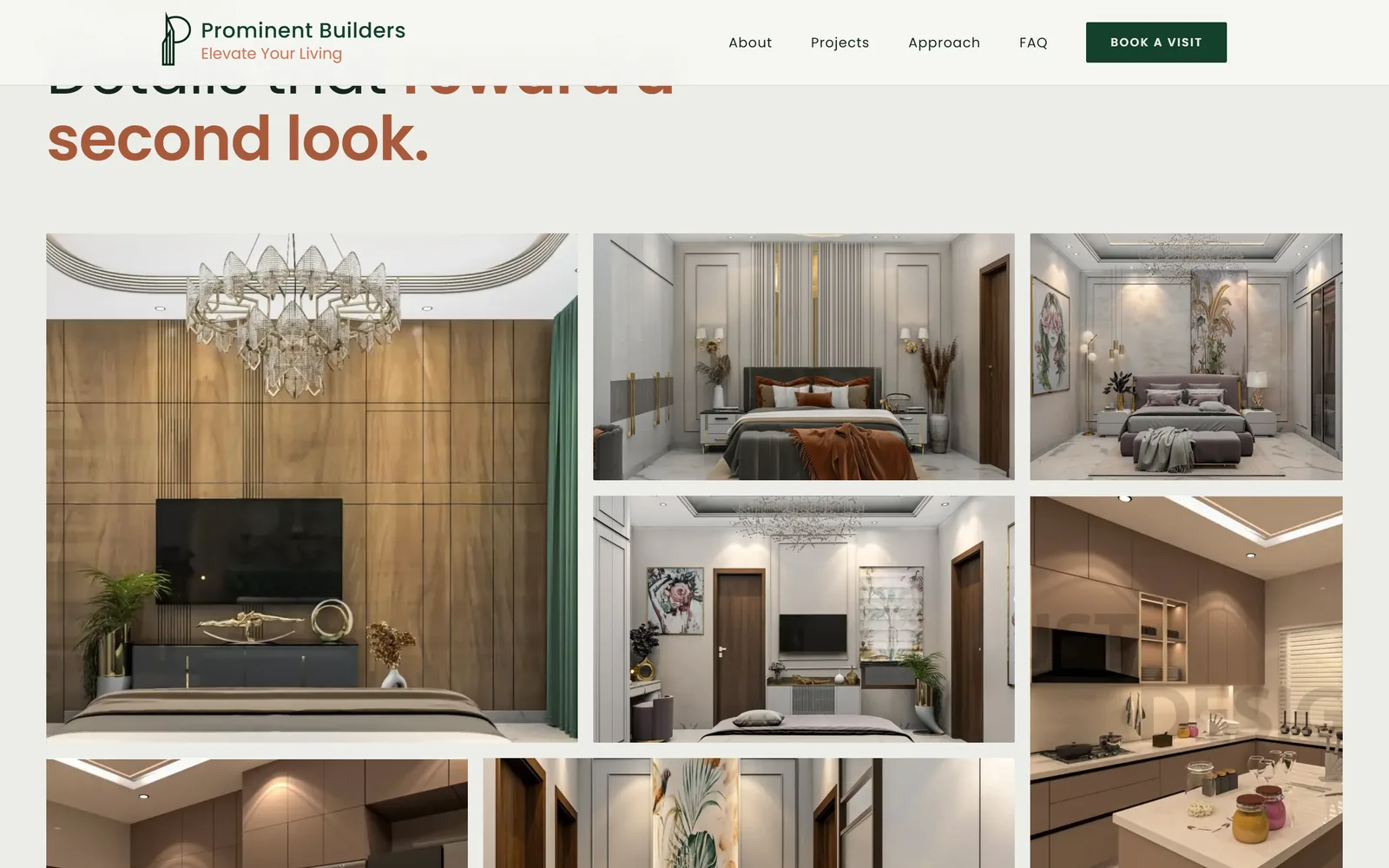
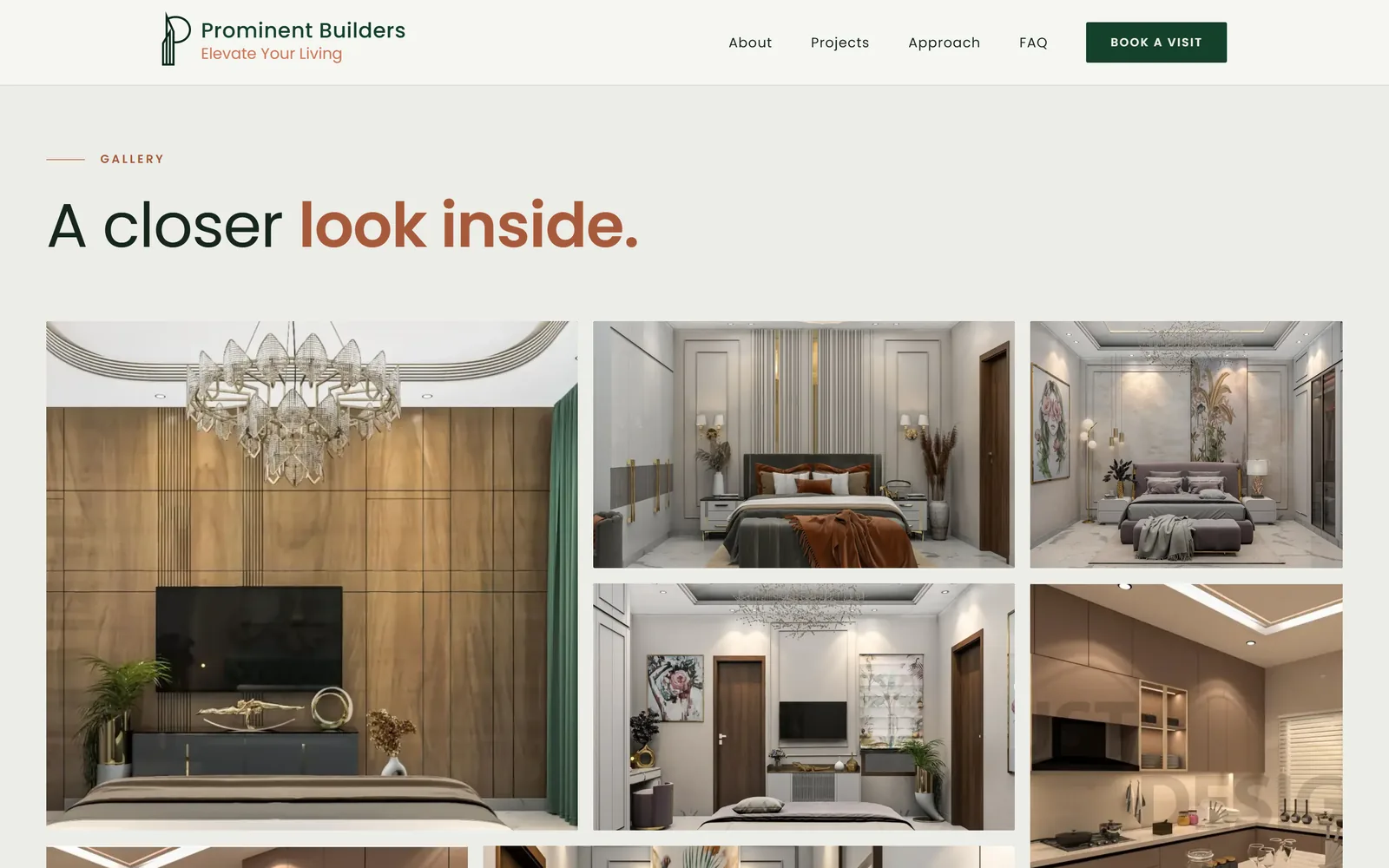
Each project page is designed to answer those questions without making the visitor hunt for details. A page includes a hero image, a short description, key buyer-facing information such as configuration and flooring, a photo gallery, a floor plan, and a map. It gives just enough context to be useful, without turning the page into a sales pitch.
The site was built for Prominent Builders, Yojna Vihar, Delhi, and is live at prominentbuilders.co.in.
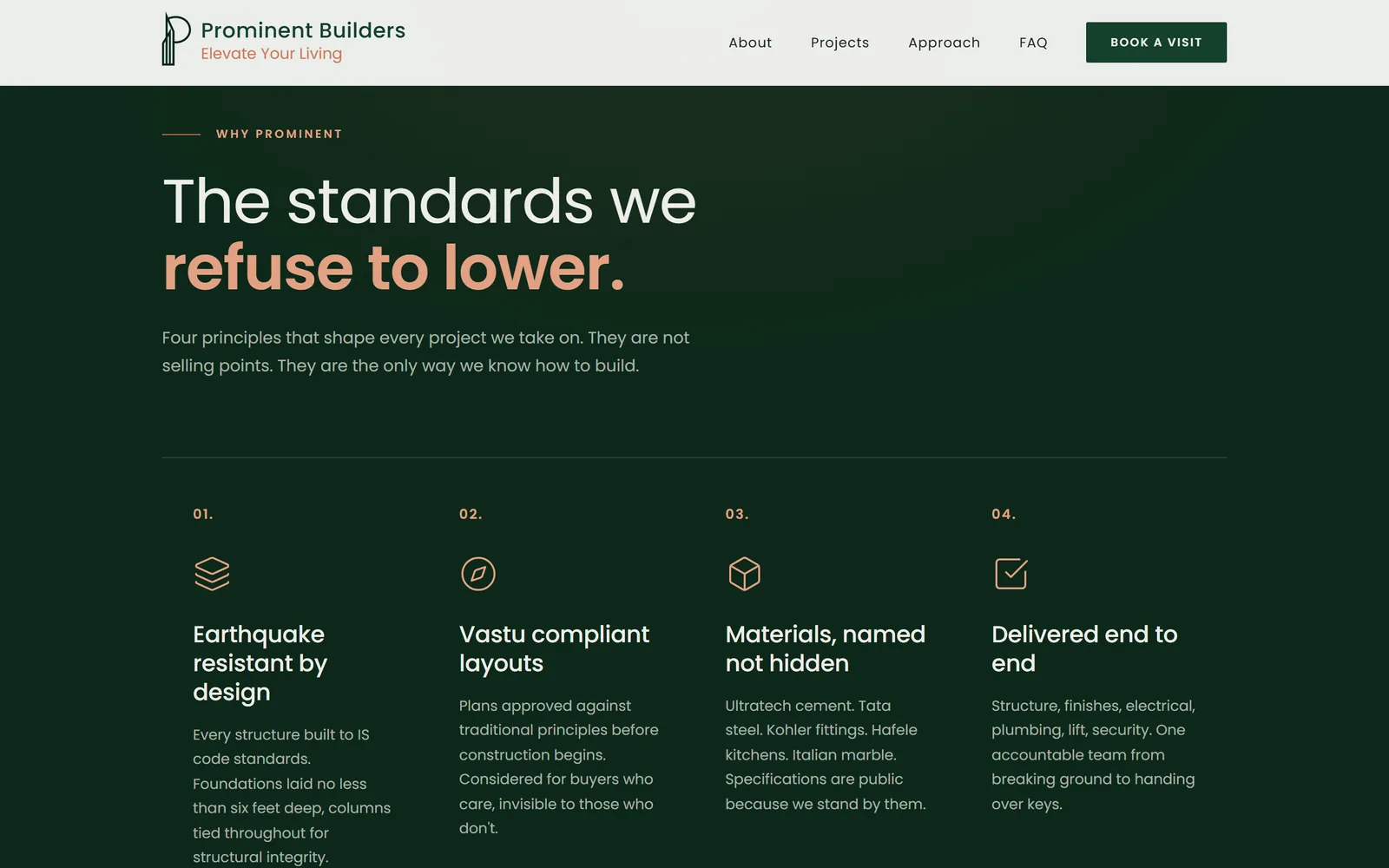
Built around how the business actually operates
One of the most important parts of the project was not visual at all. It was operational.
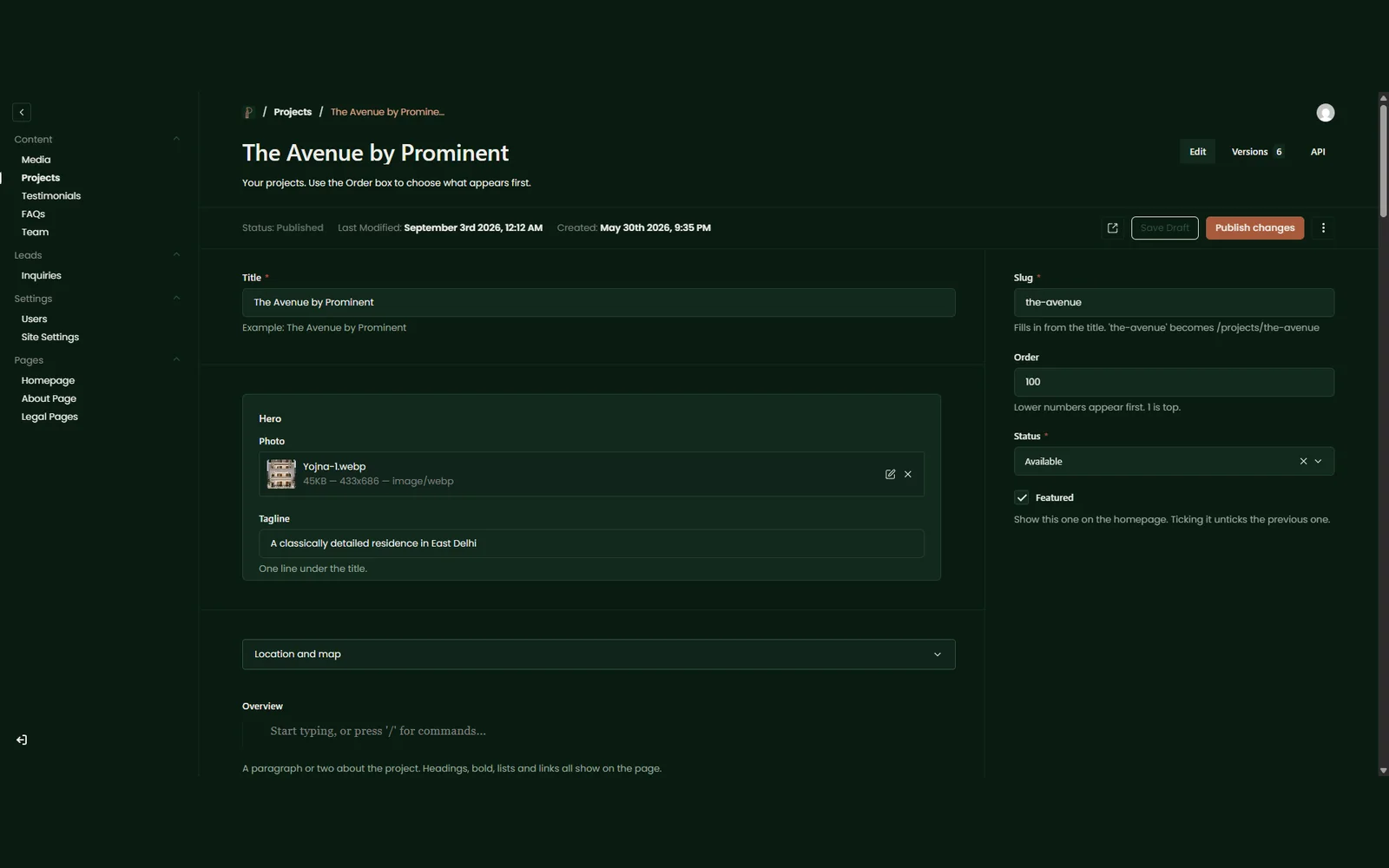
The people running the business needed to be able to update the site themselves. That meant making content easy to edit, but keeping the design fixed. Text, images, project details, phone numbers, the logo, and even the browser icon can be changed from an admin panel in the browser. When changes are saved, they go live immediately. No deploy, no developer handoff, no waiting around.
That balance matters. A site that is too rigid becomes frustrating to maintain. A site that is too flexible quickly becomes inconsistent. Here, the content can change freely, but the structure stays controlled. Colours, typefaces, spacing, and layouts are locked in code so the site always keeps its shape, even when someone adds a new project on a Tuesday evening.
That approach gives the family control without sacrificing quality.
Small details that make the site easier to maintain
A lot of good websites are made usable by the small things that nobody notices at first.
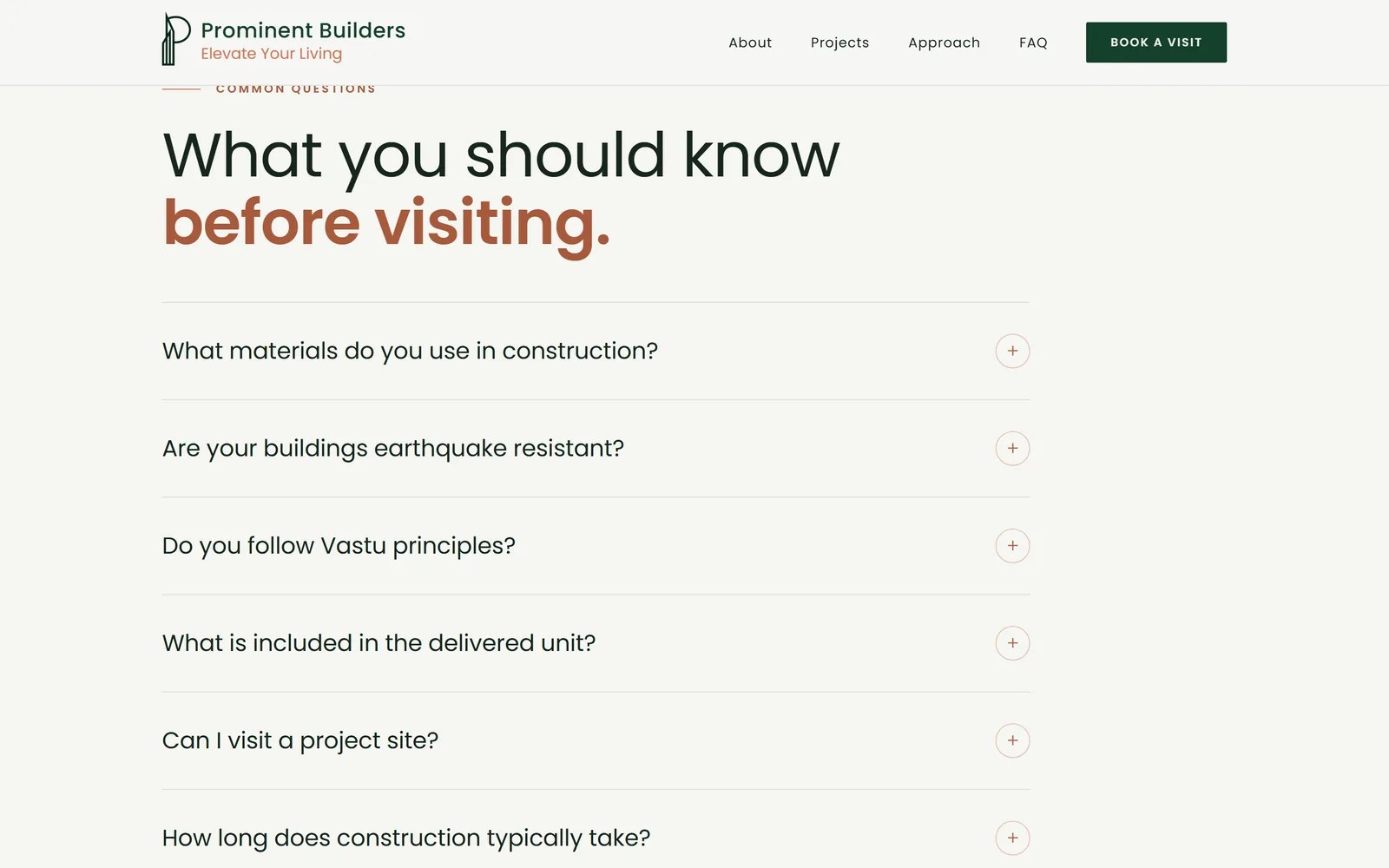
For example, sections only appear when there is content to show. Testimonials and team blocks stay hidden until the first entry is added, which means the page never has to sit under an empty heading. It keeps the site tidy and avoids the half-finished look that many content-managed websites end up with.
Floor plans can be uploaded as either an image or a PDF. That sounds like a small choice, but it matters in practice. Architects often share plans as PDFs, and the site handles that properly by turning the file into a button that opens in a new tab rather than forcing it into an image slot where it does not belong.
Images are resized as they are uploaded, so a photograph straight from a phone does not slow the site down. The help text in the admin panel also explains where each field appears on the live site, which makes life much easier for the person editing content months later. These are the kinds of details that reduce mistakes, and reduce support requests too.
Enquiries and content in one place
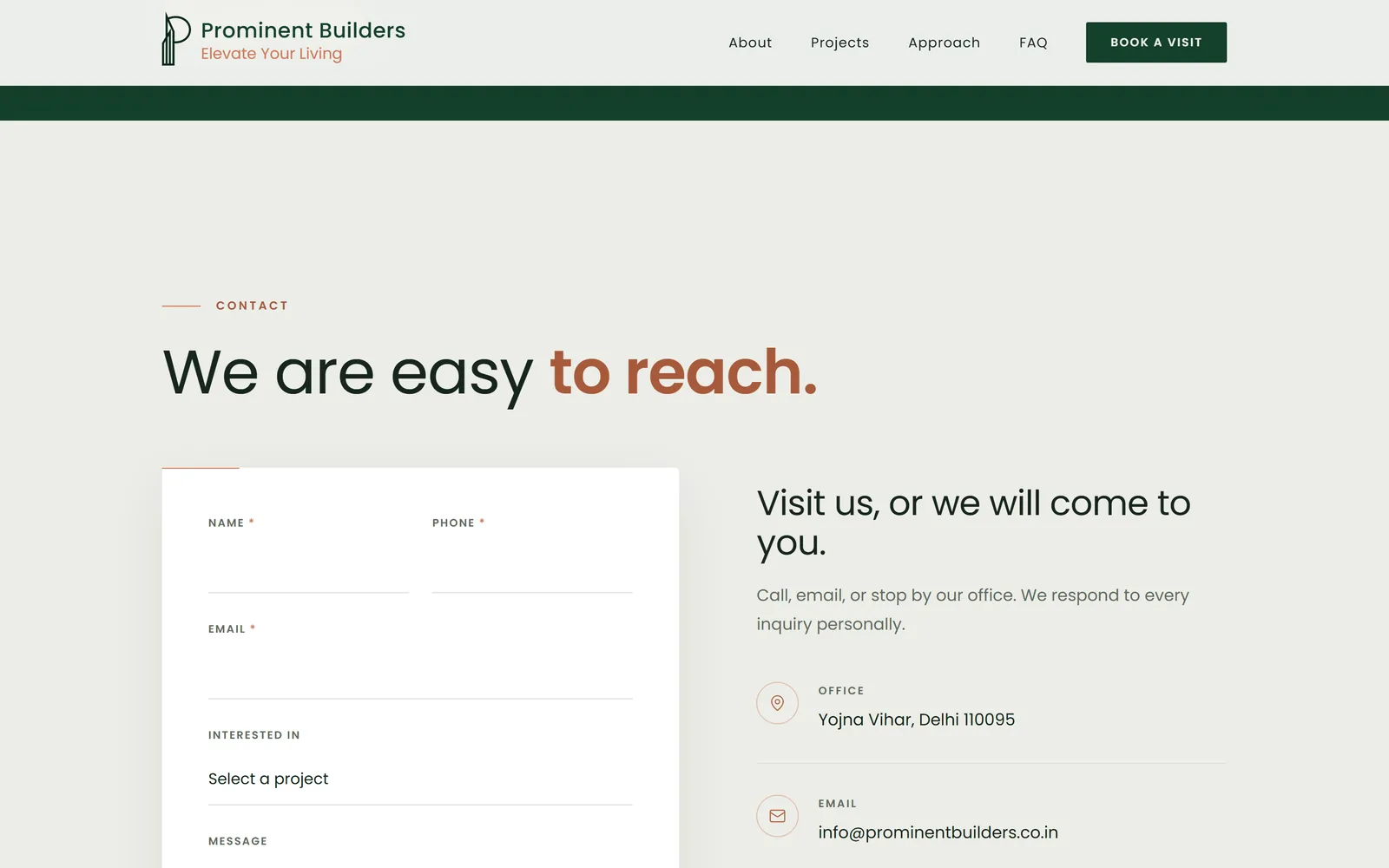
The contact form is not treated as an afterthought. Enquiries arrive in the same admin panel as the rest of the content, so leads and site management live together instead of being split across different tools.
That makes the site easier to run and easier to respond to. New messages do not disappear into a separate inbox workflow, and the people managing the site do not have to switch between systems just to see what came in. For a small team, that simplicity is useful. For a family business, it is even more valuable.
Handover that does not create dependency
A website project is only finished when the client can use it comfortably without outside help.
For this site, twelve guides were handed over with the build. They cover the admin panel, images and video, enquiries, branding, releases, the domain, email, troubleshooting, and a printed copy of the same material. That way, the people running the business are not relying on memory or scattered notes when they need to make a change later.
Content changes go live on save. The occasional code update is handled separately, with a plain record of what changed and when. The process is simple by design, and that is the point. A good handover should make the site feel owned, not rented.
A digital presence that matches the business
Prominent Builders has spent forty-five years building homes in Delhi NCR. The website now carries that history forward online in a way that feels consistent with the company itself: clear, dependable, and ready to be maintained in-house.
The project was built with Next.js 16, Payload CMS 3, Supabase, and Vercel, but the important outcome is not the stack. It is that the business now has a site it can actually use, one that shows the work, receives enquiries, and stays under its own control.
The site is theirs to run, and it was built that way from the start.
Frequently asked questions
The website for a construction firm working in Delhi NCR since 1980 consists of a homepage, a projects list, a page for each project, an about page and a contact form. Each project page shows a hero image, a short description, details such as configuration and flooring, a photo gallery, a floor plan and a map.
The family running the construction firm maintains the website itself through an admin panel in the browser: text, images, project details, phone numbers, the logo and the browser icon. Changes go live immediately on save. Colours, typefaces, spacing and layouts are locked in code so the site keeps its shape.
The website of the Delhi NCR construction firm is built with Next.js 16 and Payload CMS 3 and uses Supabase and Vercel. Enquiries from the contact form arrive in the same admin panel as the rest of the content, and uploaded images are resized automatically.
The construction firm's website was handed over with twelve guides: covering the admin panel, images and video, enquiries, branding, releases, the domain, email and troubleshooting, plus a printed copy. The aim was a handover with documentation rather than a standing dependency on the development team.






Get to know more

HAVE A COMPLEX IDEA THAT YOU WOULD LIKE US TO IMPLEMENT?
KICK OFF WITH A DESIGN-THINKING PILOT OR A CONSULTING CALL.