

CASE STUDY AI
Behördebot KI
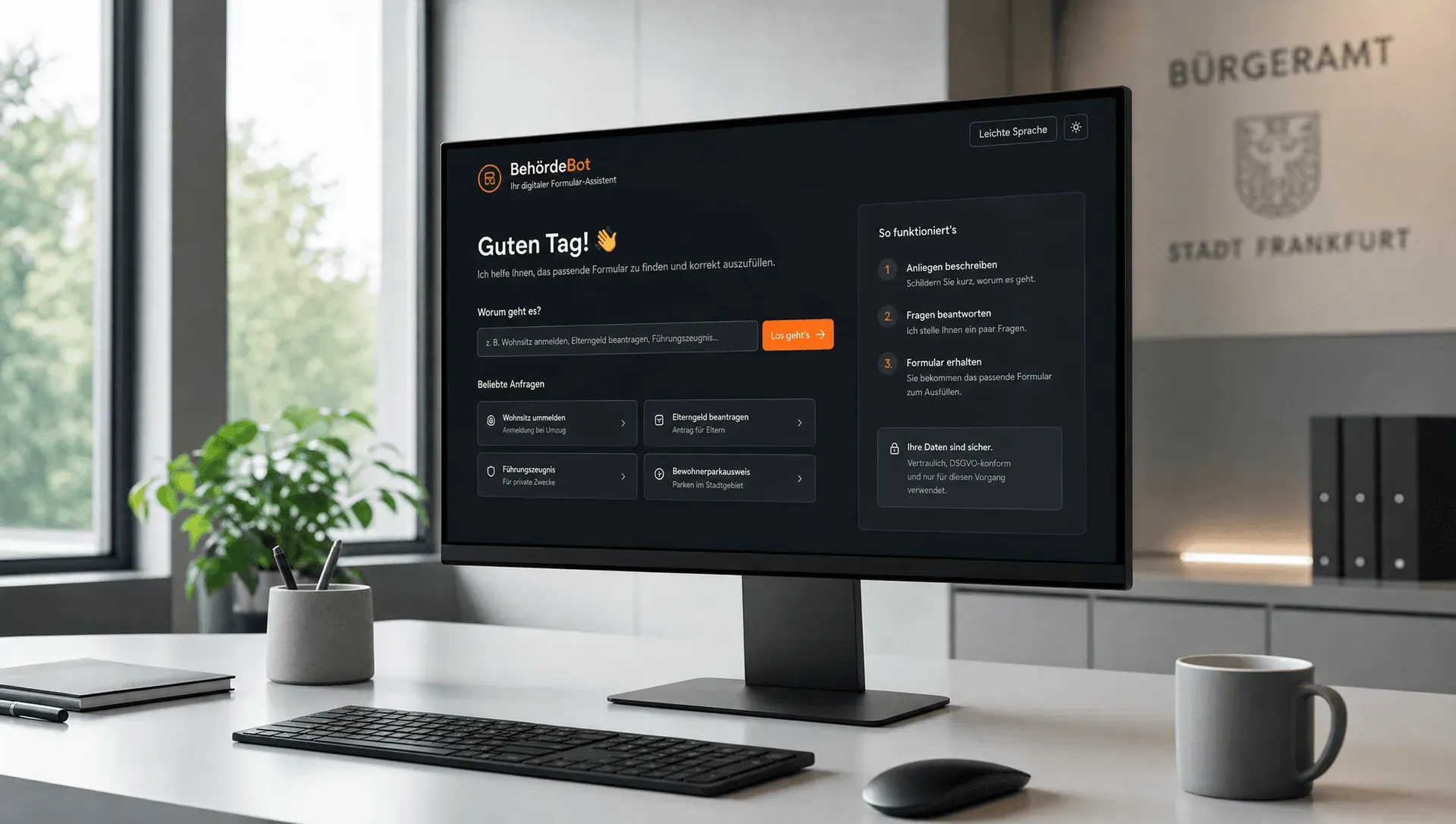
BehördeBot is an AI-powered assistant that helps users fill German public-service forms.
- Year
- 2025
- Field
- AI
- Team
- Rohit Kulkarni
- Tech stack
- RAG, AI
- Location
- Germany
- Published
- Oct 24, 2025
Project Introduction
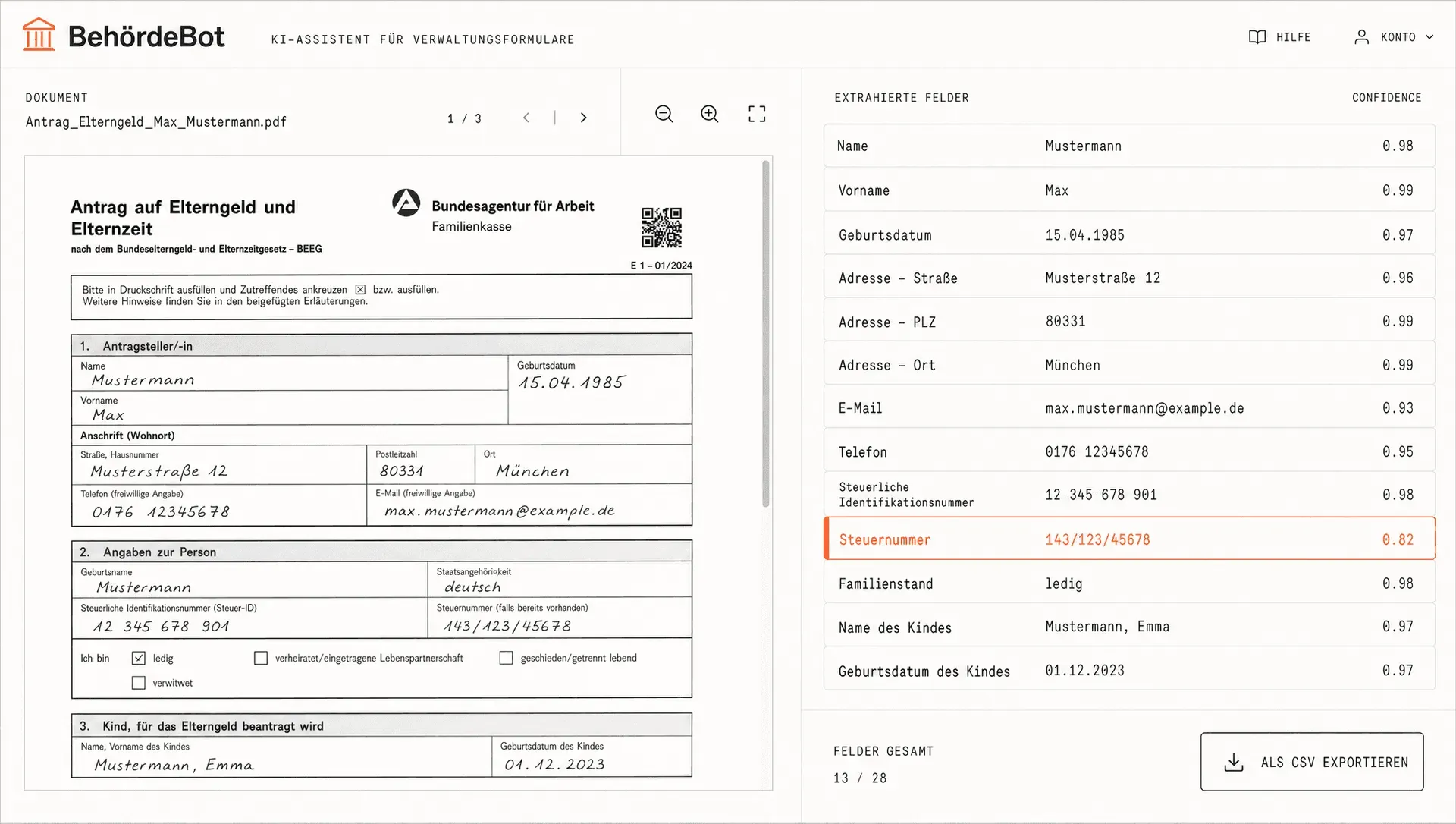
BehördeBot is a modular system with a Flask backend (core processing) and a Streamlit frontend (UI). Users upload scanned or photographed forms (PDF/JPG/PNG). The backend converts pages to images, runs OCR, and visualizes recognized text and bounding boxes.
The system classifies the form type, extracts structured fields (with confidences), performs named-entity extraction, applies heuristic error checks, and runs a Retrieval-Augmented Generation (RAG) search across a local legal-doc corpus to surface relevant legal snippets.
Users can translate content German↔︎English, edit detected field values in an interactive table, save structured JSON, and generate translated, layout-preserving PDFs for download. An evaluation dashboard computes OCR (WER/CER), translation (BLEU), and usability metrics (SUS, task completion), and session outputs/logs are stored in uploads/ and outputs/. The architecture is extensible (add more form types, add LLMs, connect cloud DBs).
Challenges
- OCR reliability on poor scans: Handwritten text, low-resolution scans, or complex layouts reduce extraction accuracy and downstream field detection.
- Form variability & layout complexity: Many government forms have subtle layout differences; robust classification and field-mapping for many templates is labor-intensive.
- Legal-context relevance & trust: Ensuring that RAG results are legally accurate, up-to-date and presented with appropriate caveats to avoid misleading users.
AI solution
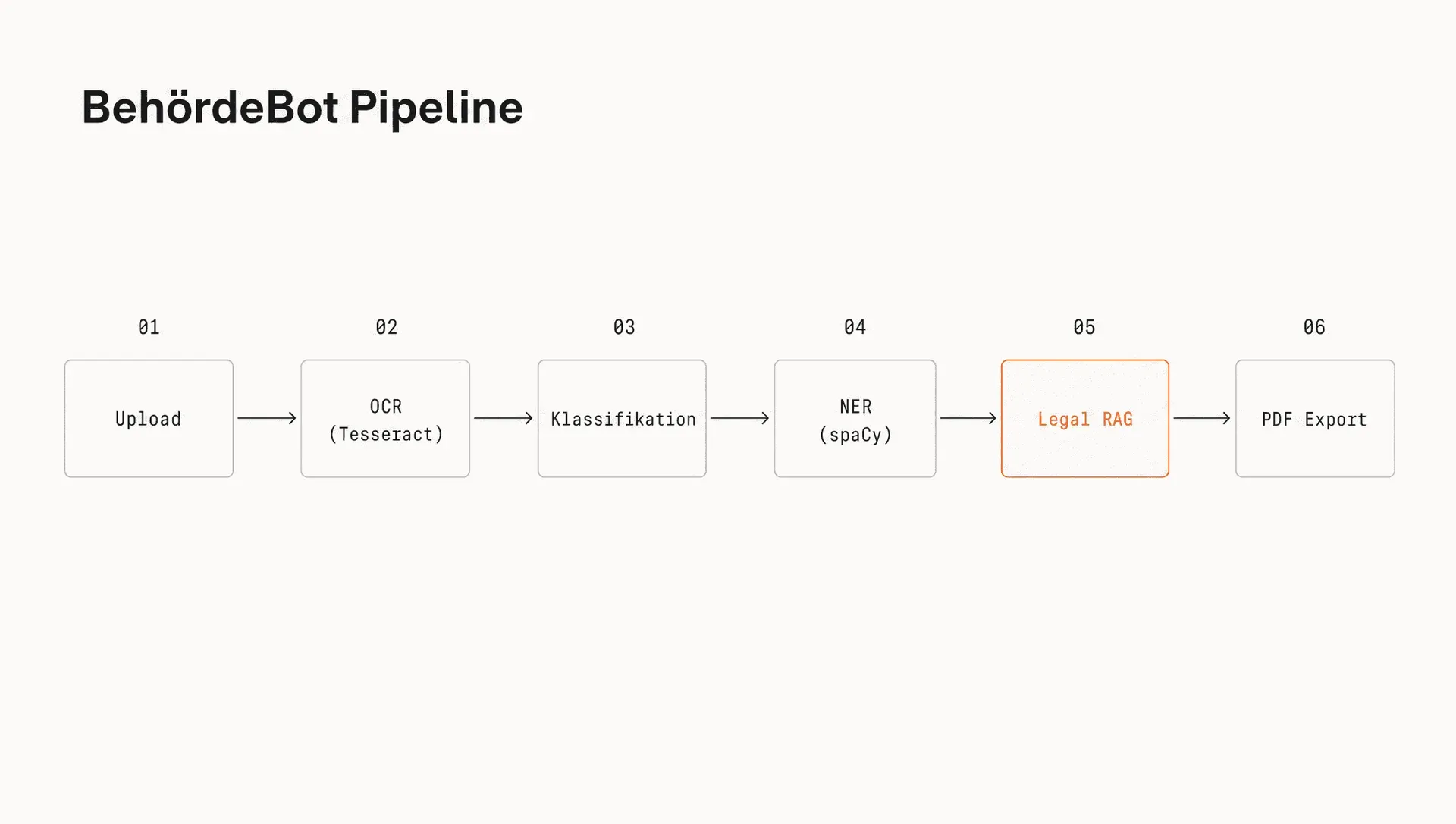
- Modular OCR + NER pipeline: Combine Tesseract (or better OCR engines) with spaCy-based NER and heuristics to extract field candidates and entity types (names, dates, addresses).
- Form classification + structured extraction: ML classifiers to detect form types and template-aware extraction logic (bounding-box + semantic parsing) to map OCR text to fields.
- Legal RAG for context-aware guidance: Local vector store over legal docs to fetch supporting snippets per query/page, helping explain form requirements and cite references.
Results / Benefits
- Faster, less error-prone form completion: Users complete forms quicker with field-level guidance, error tips, and autocomplete from extracted entities.
- Improved accessibility & multilingual support: On-the-fly German↔︎English translation and layout-preserving PDF generation lowers language barriers for non-German speakers.
- Auditability & traceability: Structured JSON outputs and logs make it easy to review what was extracted, corrected, and referenced (useful for help desks or compliance).
Resource efficiency
- Reduced manual processing time: Automating OCR + validation lowers staff time spent on manual data-entry and corrections.
- Fewer repeat submissions: Error detection and clear guidance reduce re-submissions, saving administrative costs and paper usage.
- Local/offline-first deployment option: File/ram-based state and local legal corpora allow deployments without heavy cloud costs or persistent DBs (lower hosting costs; better data privacy).
Frequently asked questions
BehördeBot is an AI-powered assistant that helps users fill in German public-service forms. Users upload scanned or photographed forms as PDF, JPG or PNG. The system recognises text with OCR, classifies the form type, extracts fields with confidence scores and provides error hints.
BehördeBot offers a local, offline-first deployment option. File- and RAM-based state and local legal corpora allow operation without heavy cloud costs or persistent databases. The RAG search uses a local vector store built over legal documents.
BehördeBot has a modular design with a Flask backend and a Streamlit frontend. The pipeline combines Tesseract OCR with spaCy-based named entity recognition, ML classifiers for form types and retrieval-augmented generation over local legal documents to surface relevant legal snippets.
BehördeBot translates content between German and English and generates translated, layout-preserving PDFs for download. Detected field values can be edited in an interactive table and saved as structured JSON, which makes it traceable what was extracted, corrected and referenced.





More case studies
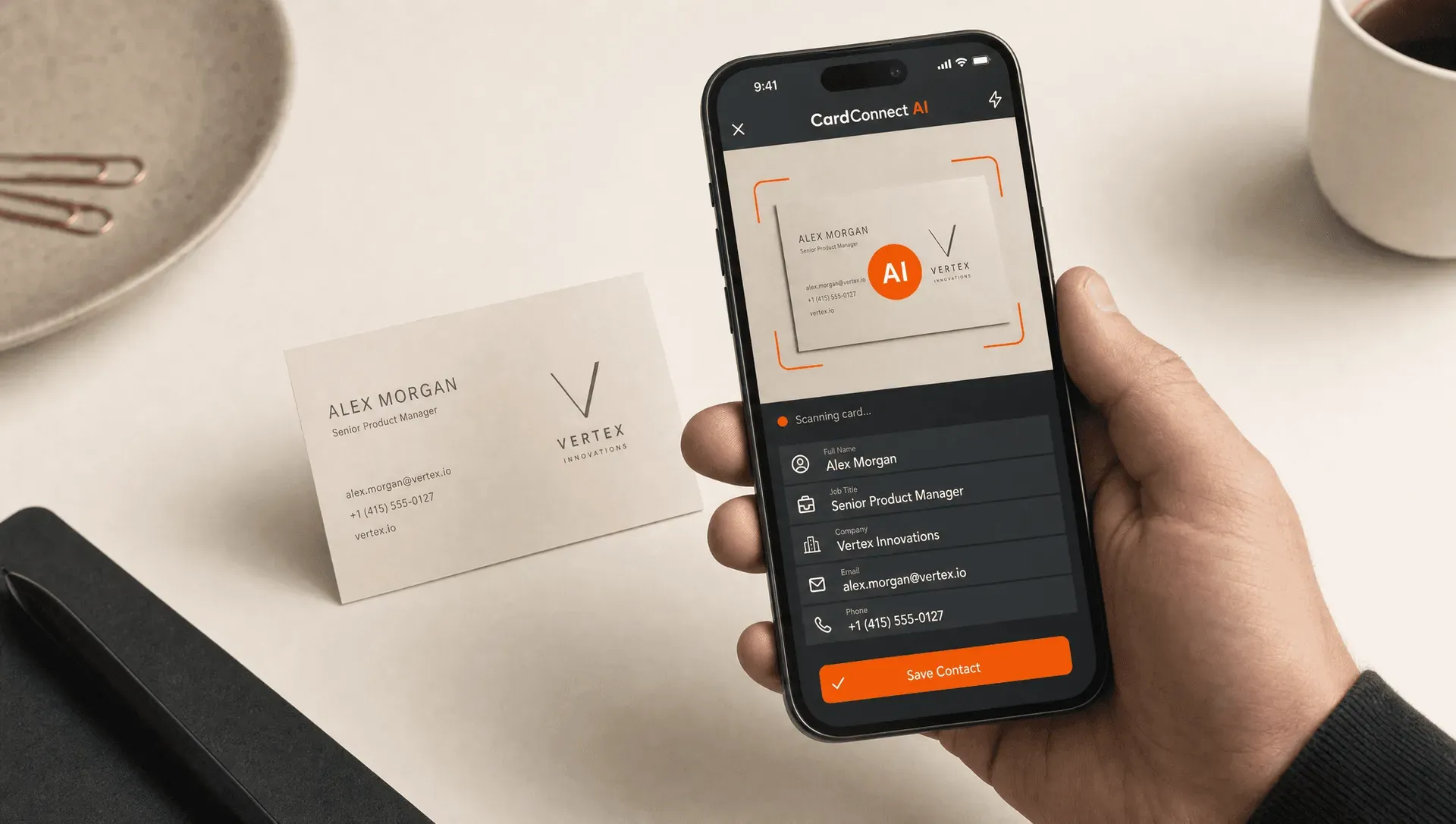
CASE STUDIES- CardConnect AI An AI-driven system that automates the process of digitizing business contacts from visiting cards.
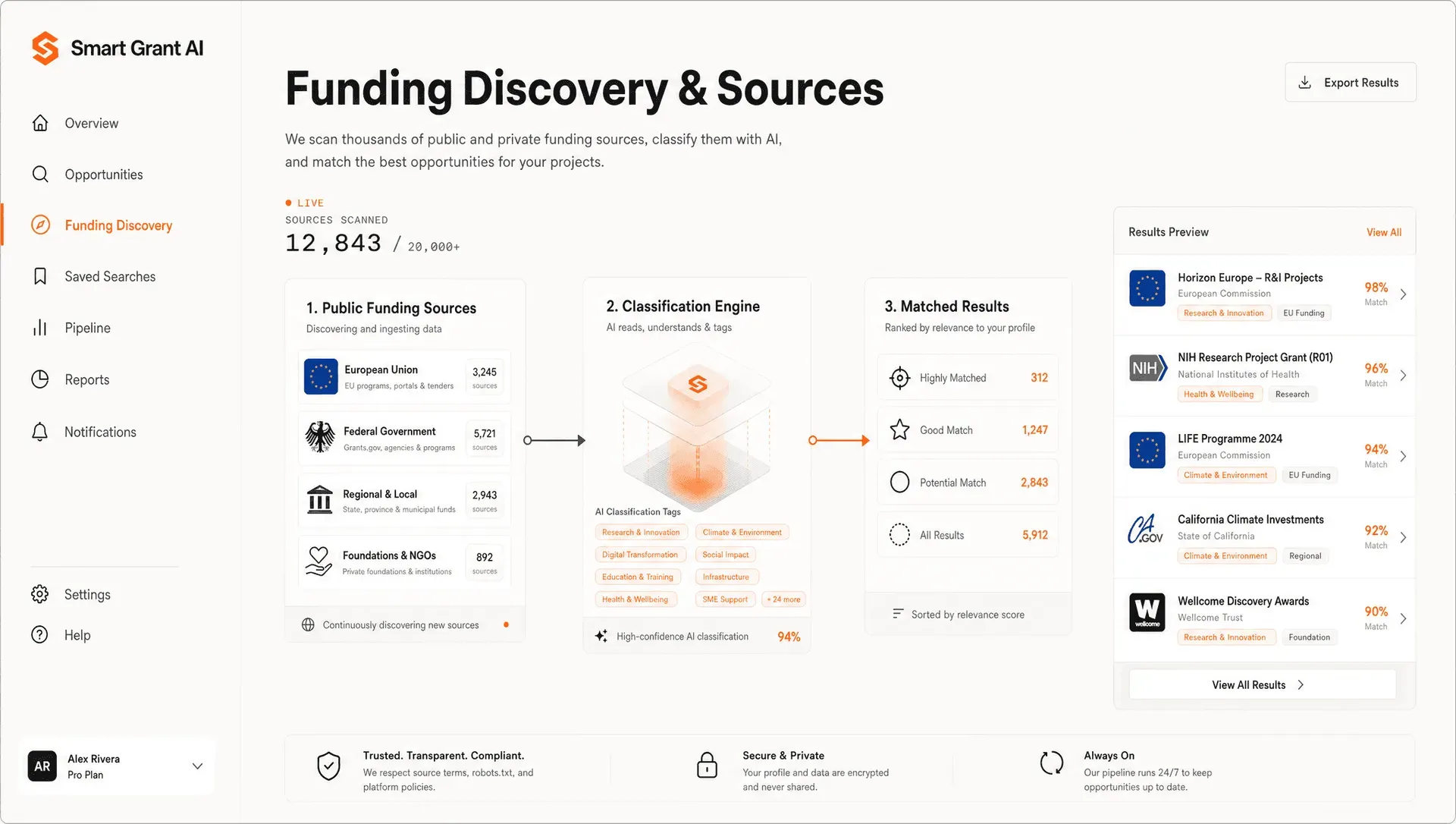
- Smart Grant AI SmartGrant sims to automate discovery of public funding and grant opportunities in Germany.
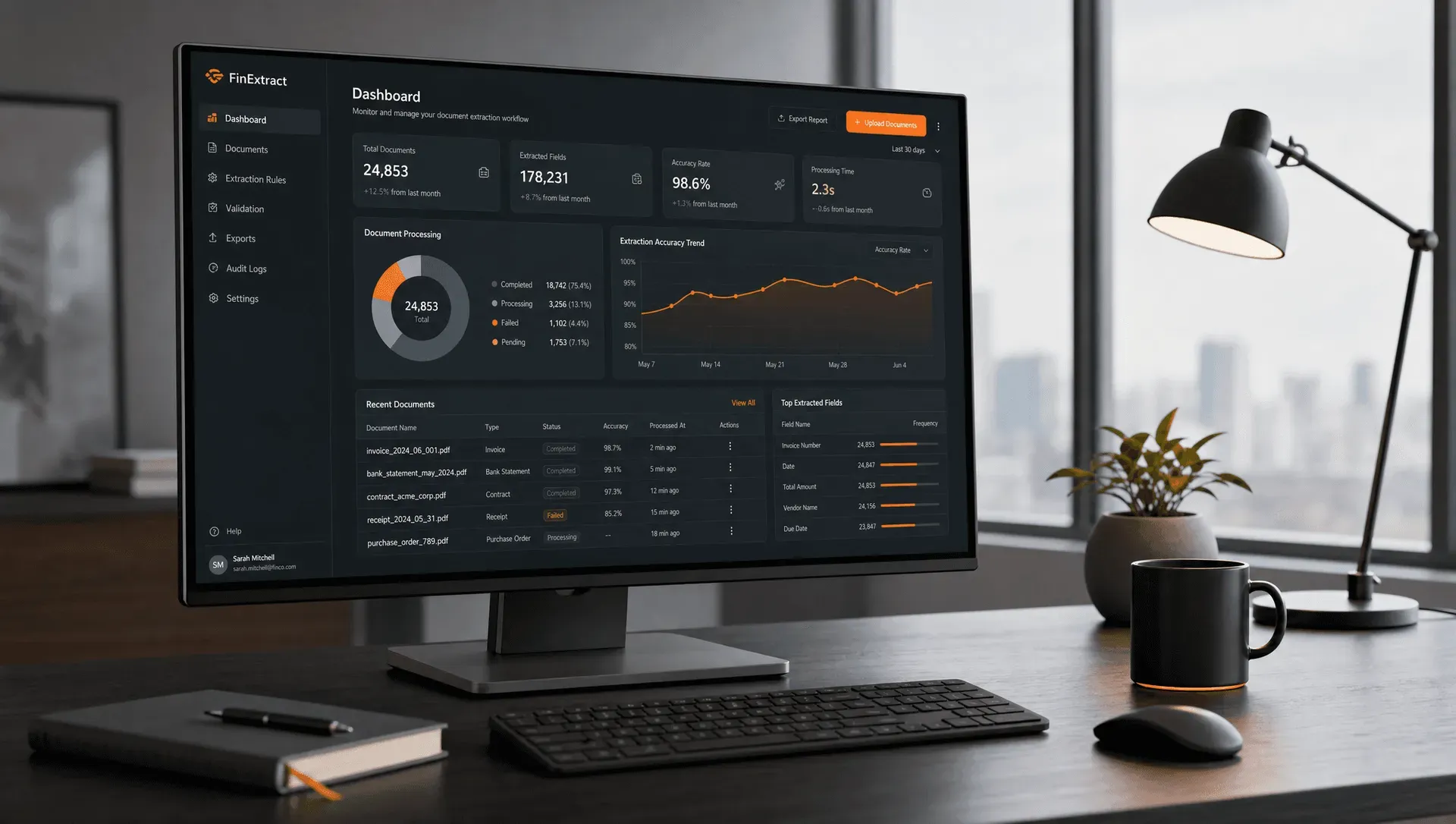
- Financial Document Extraction AI Automating financial data extraction from complex documents to improve accuracy and speed.
Have a comparable brief? We start with a design-thinking pilot.
Get in touch Or: request a 20-minute first call